Excellent information and great work!
Author: Paul
It’s great to see more improvements being made to the camps in Marojejy. Many thanks to the Lemur Conservation Foundation and to the local guides and porters for maintaining this beautiful site!
A beautiful short video of the silky sifakas, indris and white-fronted brown lemurs in Marojejy’s sister park, Anjanaharibe-Sud — an uplifting message of hope. Thank you to Wildlife Madagascar for all you are doing.
Many thanks as always to the Lemur Conservation Foundation and its dedicated team of trackers for continuing this important work.
The Lemur Conservation Foundation recently posted some excellent camera-trap photos of wildlife in Marojejy’s sister park, Anjanaharibe-Sud. These are part of a fascinating study that is providing much new information on this incredibly biodiverse area. Many thanks to all the researchers and organizations involved.
Congratulations to Arnaud Joël Harisaina, Community Health Manager for the Lemur Conservation Foundation, who has successfully completed the Young African Leaders Internship program in South Africa, and who has conducted numerous family planning workshops in villages around Marojejy National Park.
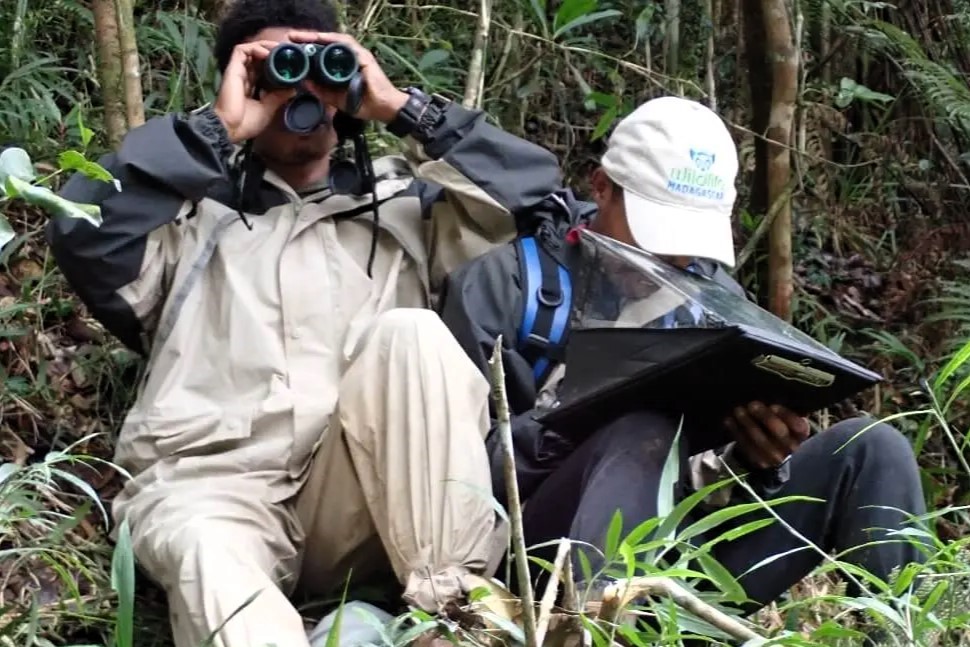
Great news from our friends at Wildlife Madagascar, who are working collaboratively with Madagascar National Parks, the Lemur Conservation Foundation, and others to conduct forest monitoring patrols in Anjanaharibe-Sud Special Reserve. Many thanks to all for their efforts.
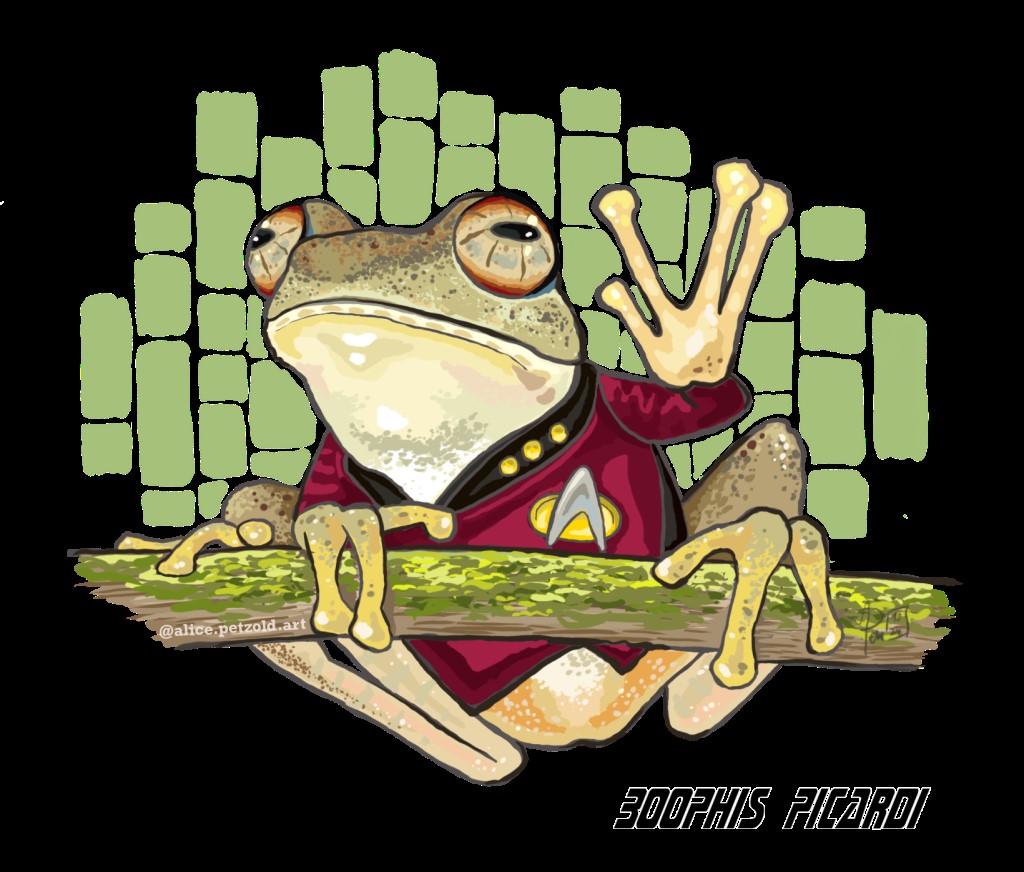
Recent genetic and acoustic analyses have revealed that the treefrogs once all lumped into the species Boophis marojezensis actually belong to eight different species. These newly described species — three of which are found at different elevations in Marojejy — have unique and distinctive calls resembling the beeps of electronic instruments, and thus have been named after captains of the Star Trek television series. May these little frogs all live long and prosper!
Read more about the study on Mark Scherz’s website, and in the journal Vertebrate Zoology.
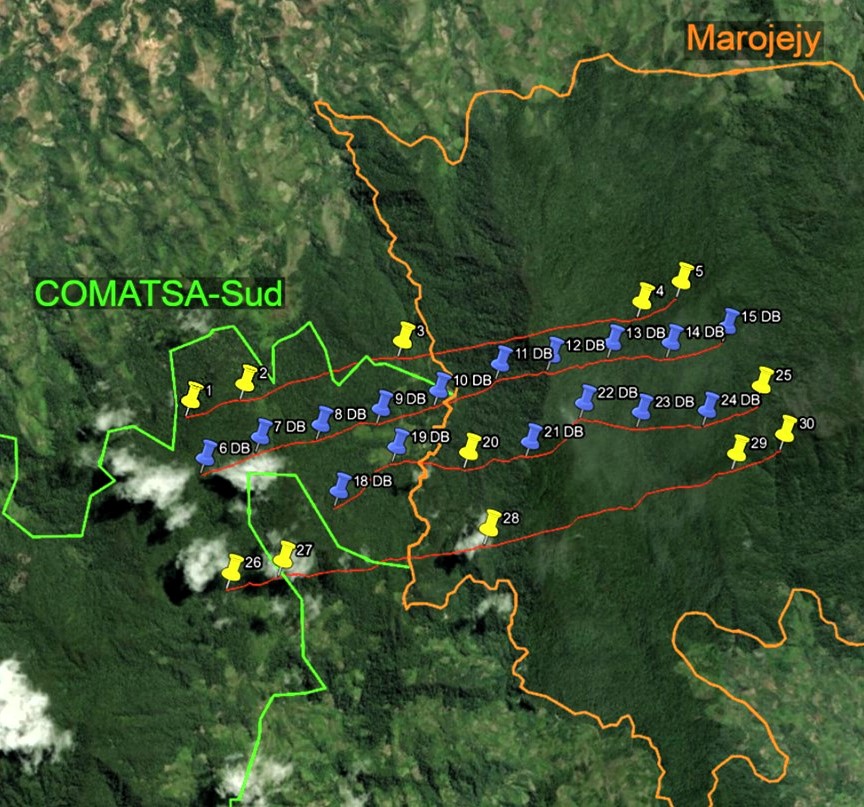
New publication by Patrick Ross: “Thin corridors limit wildlife: Variance of tropical carnivore distribution and habitat use in a critical rainforest corridor” in the journal Biotropica.
https://doi.org/10.1111/btp.13384
This manuscript sheds some light on the significant challenges faced by tropical carnivores in an increasingly narrow and critically important rainforest protected area of north-eastern Madagascar (COMATSA-Sud and Marojejy National Park).
By understanding the limitations these thinned corridors impose, we can better design and implement conservation strategies to preserve biodiversity and improve habitat connectivity.
With: Dr. Erik Patel, Rojo Nandrianina Ravelojaona, Charles Rasolondravoavy, Guy Irenel Raoloniana, Dr. Luke Dollar, Dr. Patricia Parker
An entertaining and informative progress report on a new elevational gradient survey of birds, lemurs, plants and insects being planned in Anjanaharibe-Sud Special Reserve. This will be the first such study since an initial survey was conducted in 1994; it will be interesting to learn how things have changed during the intervening 30 years.
THE PATH UP THE MOUNTAIN – WILDLIFE MADAGASCAR
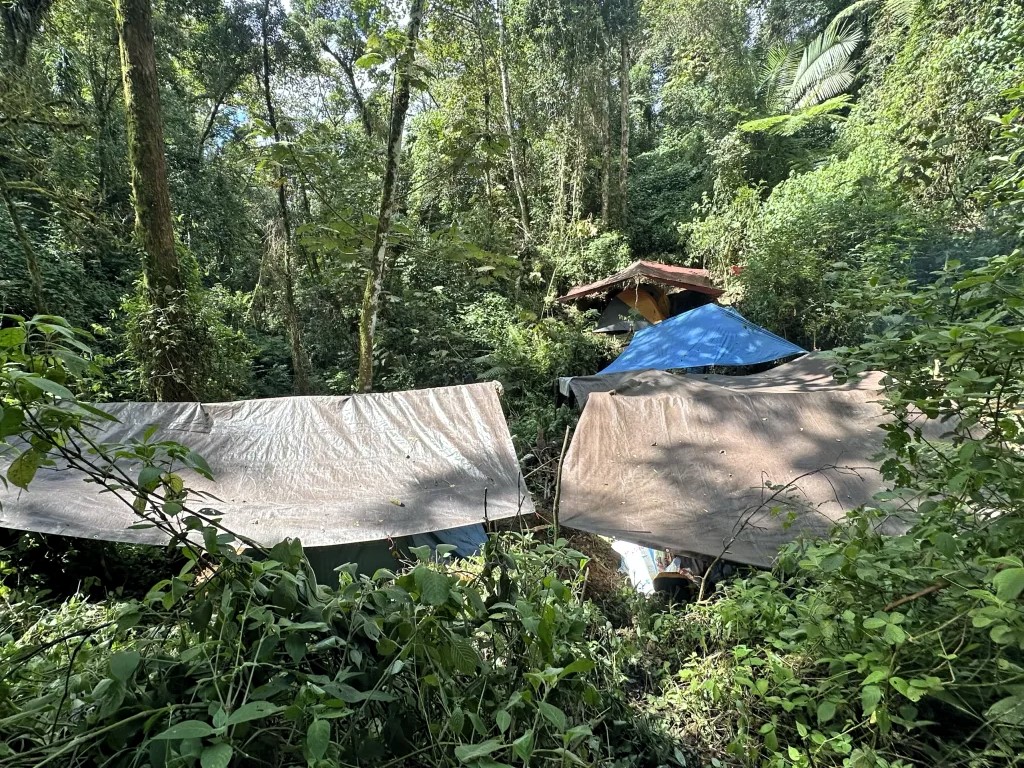
A good article on work that the organization Wildlife Madagascar is doing in Marojejy’s sister park, Anjanaharibe-Sud — with a great photo of our good friend, Rodolphe Randriamisaina, who has been on countless expeditions to the area over the past few decades, a true hero.
OF LEECHES AND LEMURS: SOCIAL RESEARCH IN AND AROUND ANJANAHARIBE-SUD – WILDLIFE MADAGASCAR
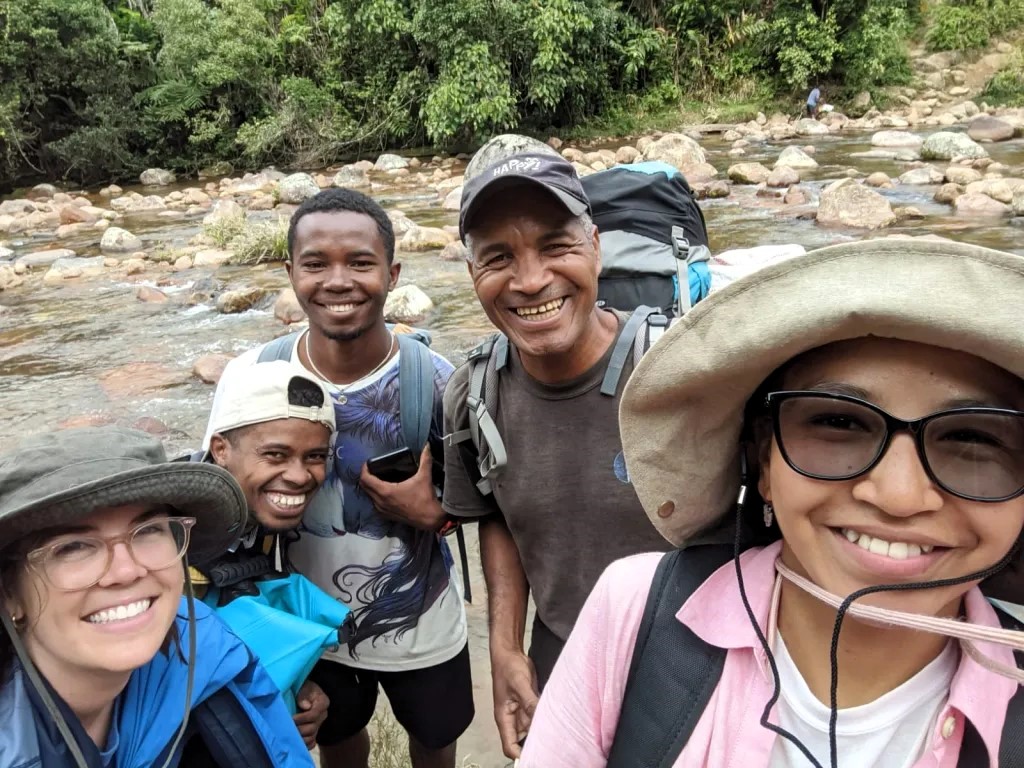
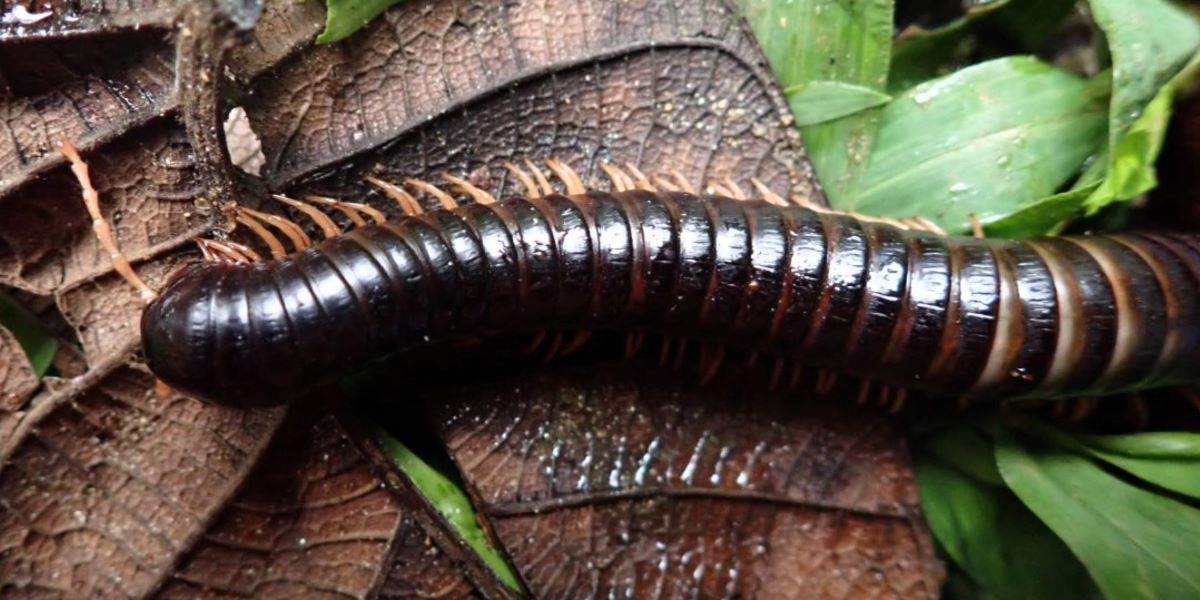
A recent expedition to Makira Natural Park found a number of species that had not been seen in decades and had been presumed lost to science.
https://waterjournalistsafrica.com/2024/07/presumed-lost-species/
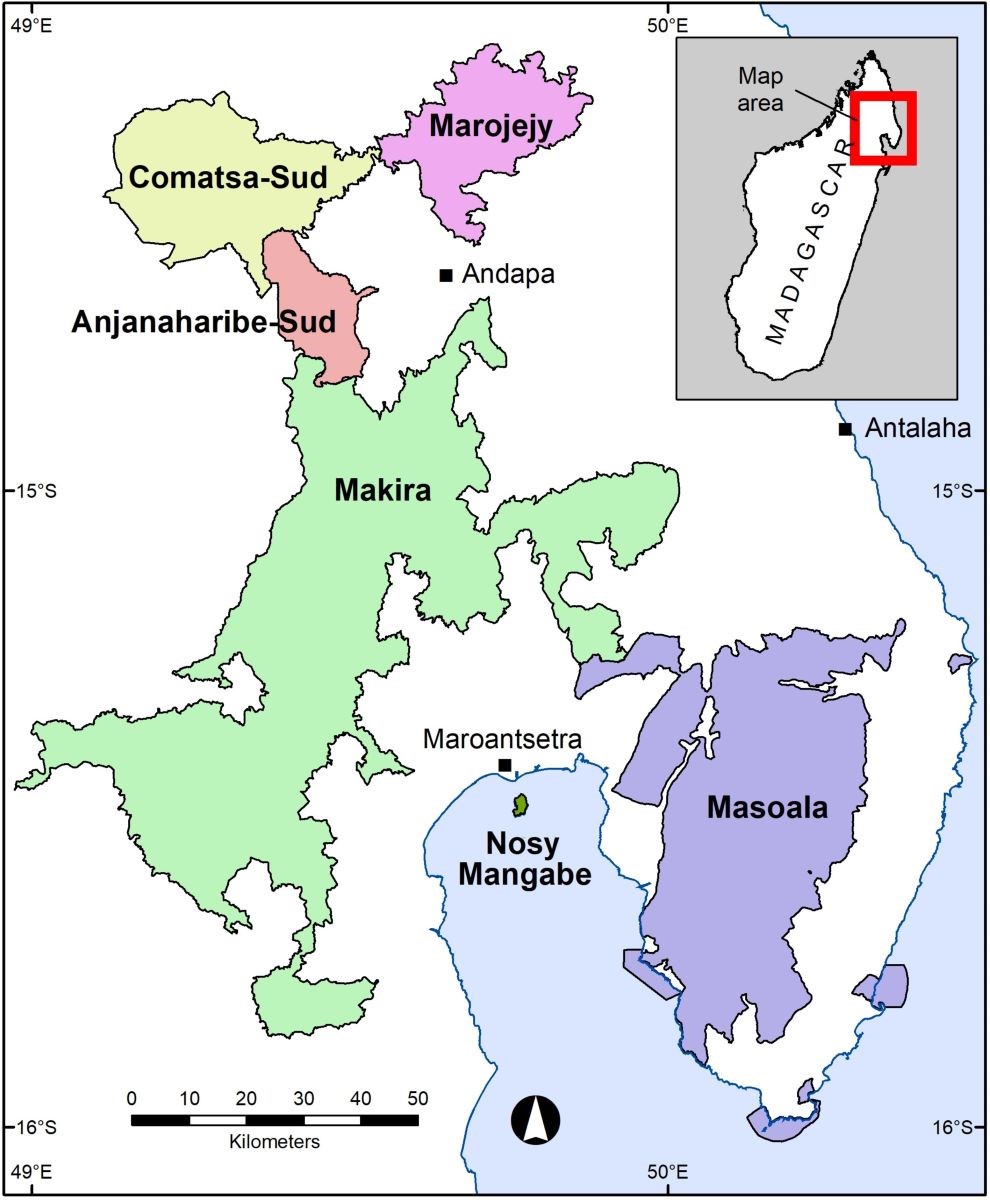
Makira is an extensive area of rainforest located just to the south of Marojejy and Anjanaharibe-Sud.
The JHA Fund works in the SAVA region, promoting environmental education, building schools, and working with the leprosy community. This new video highlights some of their ongoing activities.
Wildlife Madagascar has established a new office in Andapa and has begun field work in the Anjananaribe-Sud Special Reserve. Read the latest on their efforts at https://wildlifemadagascar.org/2024/06/12/boots-on-the-ground-at-anjanaharibe-sud-special-reserve/.
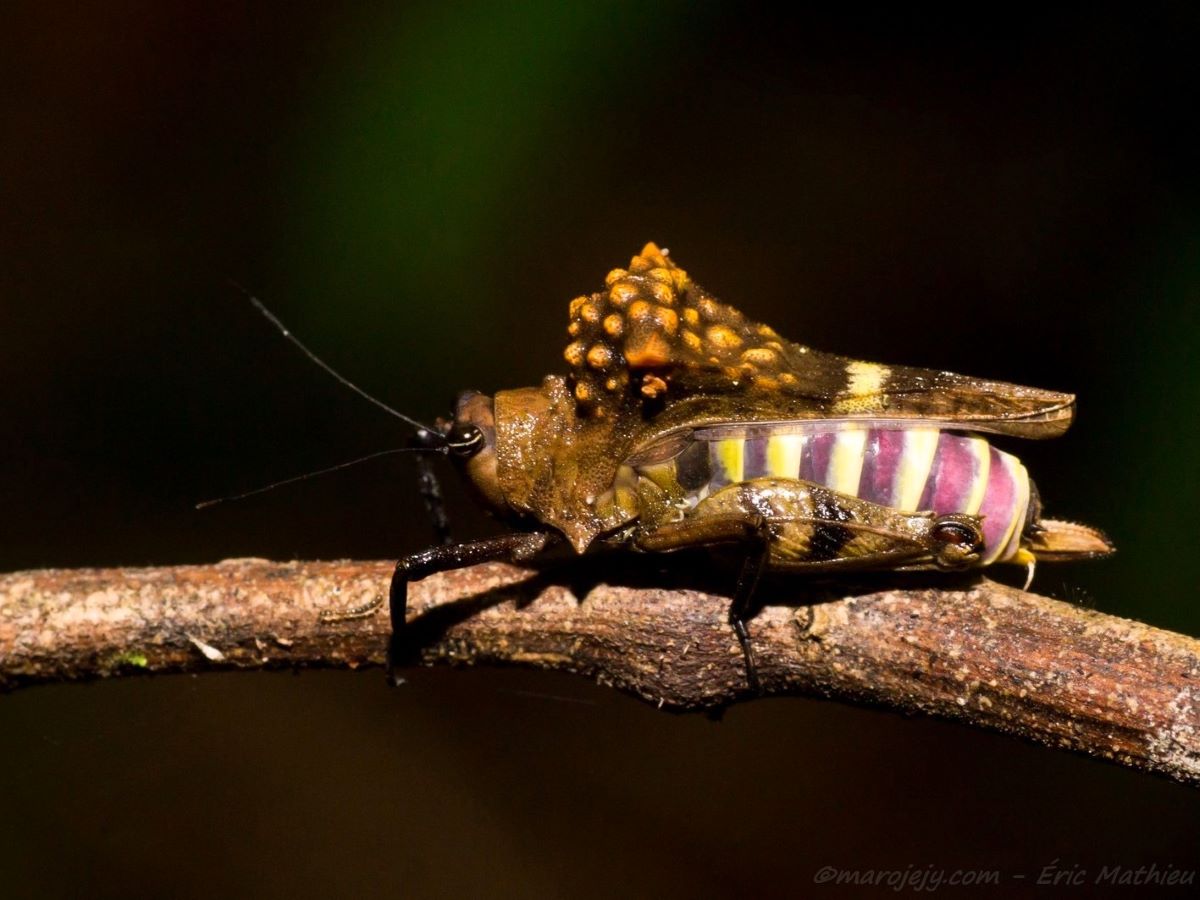
A photo of the Formidable Pygmy Grasshopper (Notocerus formidabilis), taken in Anjanaharibe-Sud Special Reserve and uploaded to the biodiversity observation program iNaturalist, has been featured in a recent article in the scientific journal Nature.
The Formidable Pygmy Grasshopper is a rare insect endemic to the SAVA region of Madagascar; it was originally described in 1974 but never observed again — until three of these grasshoppers were photographed in 2007, 2009 and 2015 by Éric Mathieu of marojejy.com. By uploading the photos to the iNaturalist platform, Mathieu was able to collaborate with two Croatian researchers, Marko Pavlović and Josip Skejo, who were able to not only identify the grasshopper but also discover its unique coloration, which hadn’t been previously described. Mathieu, Pavlović and Skejo ultimately co-authored a paper in the scientific journal ZooKeys on this new discovery.
As noted in the Nature article, illustrated by the example of the Formidable Pygmy Grasshopper, citizen science through platforms such as iNaturalist can be extremely powerful in adding to our understanding of the world’s biodiversity.
Links:
iNaturalist observation of Notocerus formidabilis
Check out more photos of the truly amazing biodiversity in Marojejy and Anjanaharibe-Sud in our photo galleries!
Another superb video from Duke Lemur Center – SAVA Conservation.
“A multidisciplinary team of researchers has been studying the complex relationships between people, plants and lemurs in COMATSA (a protected area near Marojejy and Anjanaharibe-Sud in the SAVA region). Researchers from local communities, Duke University, Duke Lemur Center, CURSA (the regional university of SAVA), and the University of Antananarivo are working together to study why these relationships are important and how environmental changes can alter essential ecological interactions. By integrating lemur studies, botanical plots, seed dispersal experiments and local ecological knowledge, the team hopes to advance the understanding of forest ecology and conservation in COMATSA.”
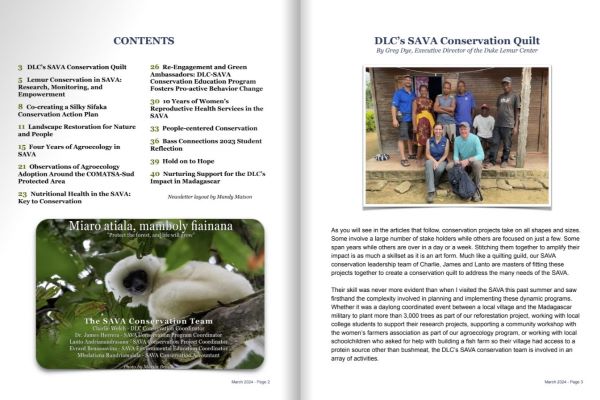
An excellent summary of the latest work being done in the Marojejy/SAVA area by Duke Lemur Center – SAVA Conservation.
SAVA Newsletter 2024 (connect-technology.net)
Excellent photos of Silky Sifakas, a critically endangered lemur found in the forests of Marojejy and Anjanaharibe-Sud. [Captions in French.]
The Lemur Conservation Foundation has just released an excellent short documentary film on the work they’re doing in Marojejy and the SAVA Region of Madagascar, as well as in their facility in the USA. It’s well worth watching.
A night in the rainforest is an unforgettable experience. A graduate student from America discovers the magic of Anjanaharibe-Sud Special Reserve where he will be doing research. Read his account here.